

Jeju's south coast at walking pace — tea fields, basalt cliffs, hot water every evening, and ten guests, never more.
On the trip's one longer day we drive east to Seongsan, where the haenyeo, free-diving women in their seventies, sing the Ieodo work song, then slip under the swell without tanks. UNESCO lists their culture as intangible heritage; we simply watch from the cove, then sit down to abalone stone-pot rice beside the farm that raised it. The sea decides whether they dive that day.
Your first base is the late Itami Jun's Podo Hotel — twenty-six rooms under a roofline drawn from Jeju's volcanic hills, with hot-spring water running to the bath in your room. His Bangju Church stands a few minutes away. First light over the vineyards, watched from your own bath, is the kind of moment this trip is built around.
Mid-October to mid-November, after the typhoons and before the cold: clear days around nineteen degrees, silver grass on every slope, the first tangerines coming in. For anyone flying up from the equator, cool dry air is half the holiday.
Walking is capped at two and a half gentle hours, every afternoon has slack, and each day ends in hot water or the sea. The bases sit about twenty-five minutes apart on the same coast, so a transfer is a scenic errand. The nonstop from Singapore lands at first light, and the first day is built to absorb it: porridge, a short drive, a bath, a nap.
Land at dawn, abalone-porridge breakfast, and the short drive south. Late morning with Itami Jun's Bangju Church and the Podo Museum; afternoon at the hotel spa, and sleep that arrives early and easily.
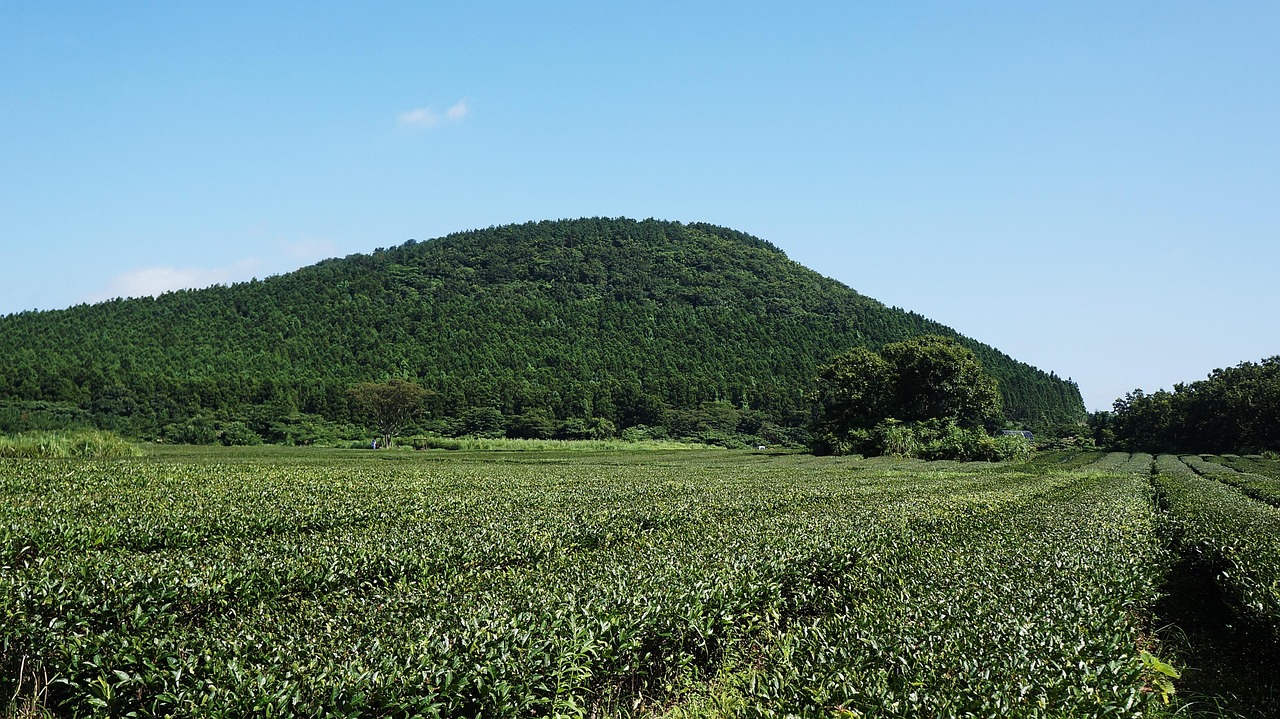
The Seogwang tea fields before the buses arrive and a private class at the tea museum, then a slow afternoon in the Gotjawal lava forest, the strange green rock-woodland only Jeju has.
Sanbangsan and the Yongmeori tuff coast, tide permitting, hairtail at Moseulpo port for lunch, then the coastal path beneath Songaksan with Hallasan at your back and Marado offshore. Sunset from the cliff cafés.
Hallasan's gentlest trail to the Byeongpungbawi cliff amphitheatre: two and a half unhurried hours above the clouds. Then down to Jungmun, Jusangjeolli's basalt columns and a bath before dinner.
The one longer drive. Seongsan Ilchulbong mid-morning, abalone stone-pot rice for lunch, and the afternoon haenyeo demonstration: the Ieodo work song, then silence as they disappear under.
The best of Olle Route 7: Oedolgae sea stack, forest-to-sea path, about two easy hours. Then grazing the Maeil Olle market. Farewell dinner of black pork over citrus wood.
A slow waterfront morning if the flight allows, then the hour's transfer north for the nonstop home.
Itami Jun's twenty-six rooms in the Andeok hills, a building that behaves like the landscape, with volcanic hot-spring water arriving in your own bath.
A stone-walled, thatch-roofed house on a sea cliff at Jungmun, ten minutes from the basalt columns of Jusangjeolli at golden hour.
A quiet, spring-fed hotel in the Hallasan foothills, where the water is drawn from volcanic bedrock and the forest is the programme.
From S$8,400 per person, twin share
Founding departures · dates confirmed with each cohort · final quote in writing before any deposit
The price carries everything on the ground: the hotels, the one table, the van, the tickets. You bring your appetite.
Every departure is hosted by Jo Hartanto — founder, ICF-trained coach, licensed Singapore guide, and the reason the itinerary says "nothing before ten." Jo designs each journey, walks every route before its first departure, and sits at the same table you do.
Questions before anything else? jo@softreset.sg
If you can walk unhurried for two or three hours with stops, you'll finish every walk with breath to spare. Hallasan's Yeongsil route is the gentle boardwalked one non-hikers favour, Seongsan Ilchulbong is about fifty minutes up and down, and the Olle stretches are flat to gentle. Every walk has an opt-out, and every afternoon has slack.
You'd be in good company: a group of ten is kind to solo travellers, and one table folds everyone in by the second dinner. The price shown is twin share; if you'd prefer a room to yourself, ask and we'll quote the single rate for your departure.
Mid-October to mid-November is the window: typhoon season is over, days sit around nineteen degrees, and the silver grass is at its peak. A few things still answer to the sea: the Yongmeori coast closes at high tide, and the haenyeo dive only in calm water. We hold alternates for both, and treat those moments as gifts rather than guarantees.
A deposit holds your place; the amount and the full terms arrive in writing before you pay anything. The balance is due sixty days before departure. Cancel more than sixty days out and your deposit moves in full to any future journey. Inside sixty days we recover everything the hotels and carriers allow and return it, and we tell you plainly where you stand at every step. If we ever cancel or move a departure, everything comes back to you in full.
Because ten fits. Ten guests settle into a corner of Itami Jun's twenty-six-room Podo Hotel, sit at one table, and move in one van. It's also the number at which Jo hosts every departure personally and knows everyone by name by the first dinner.